September 2026 · 3 min read · Delaney Construction Projects
Should you choose a licensed builder or go owner builder?
It's one of the first decisions you'll make, and it shapes everything that follows. Here's an honest look at both paths — what you gain, what you take on, and where each one makes sense.
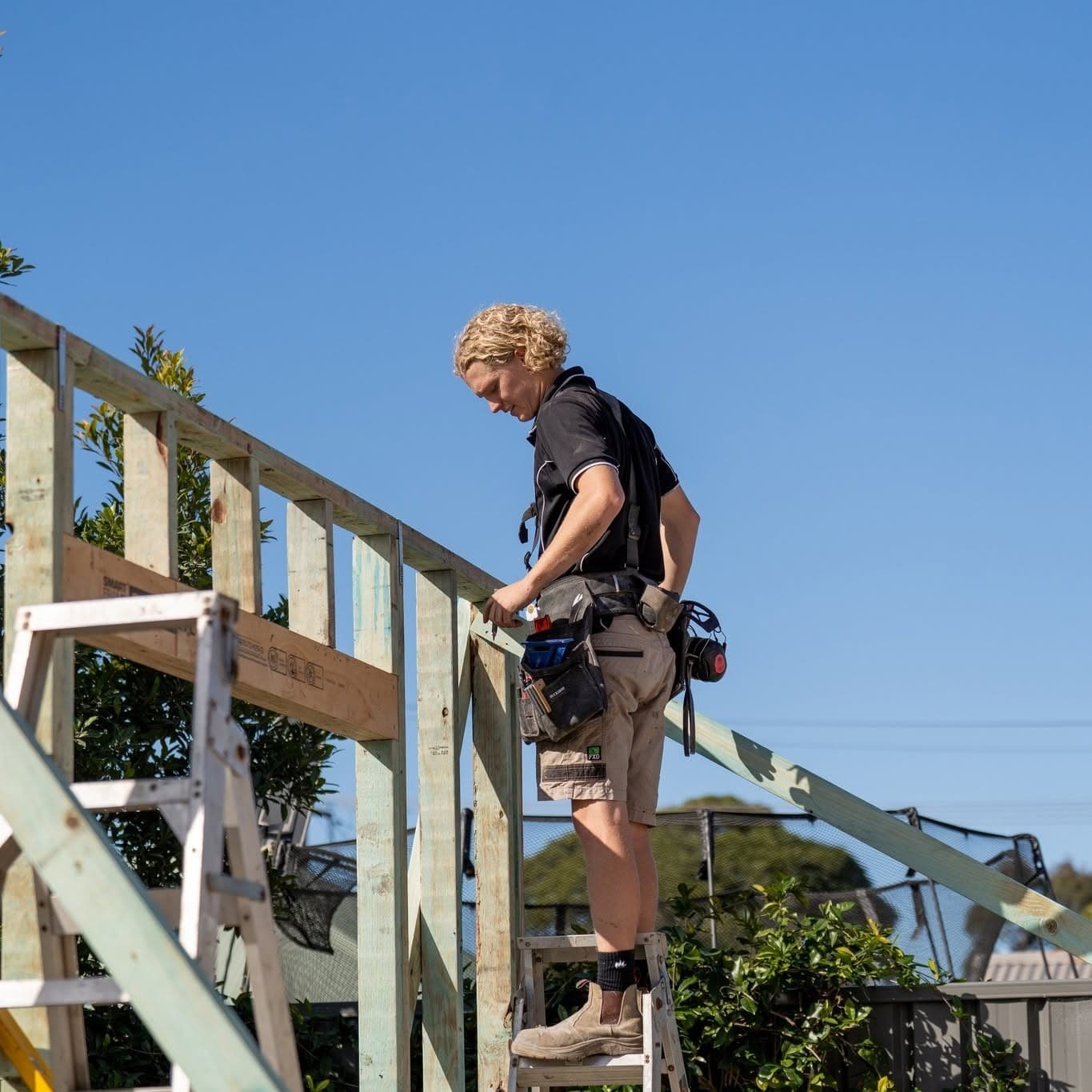
Going owner builder
As an owner builder, you take full responsibility for the project — organising trades, scheduling work, sourcing materials, and managing compliance.
Potential benefits:
- Save on builder's margins
- Have complete control over the process
- Gain a rewarding hands-on experience
Challenges to expect as an owner builder
The benefits are real, but so is the workload. Before committing, be clear-eyed about what the role involves:
- Managing a build is essentially a full-time job
- Requires strong trade knowledge and project management skills
- Higher risk of delays, budget blowouts, or compliance issues
- Full legal responsibility for safety and standards
- May affect resale value if buyers are wary of owner-builder homes
Choosing a licensed builder
Hiring a licensed builder shifts that responsibility to a professional who's trained, insured, and accountable for the quality of the work.
Key advantages:
- Peace of mind knowing compliance and safety are handled
- Access to reliable trades and established supplier networks
- Insurances and warranties that protect you long after handover
- Greater efficiency, fewer costly mistakes, and less stress
The trade-off
It costs more upfront, but you're paying for expertise, accountability, and a smoother experience.
Our advice
Every project is different, and there's no one-size-fits-all answer. If you're highly experienced, have the time, and are comfortable taking on significant risk, the owner-builder path can work. But for most homeowners, especially on larger or more complex builds, the safer and more cost-effective option in the long run is to partner with a licensed builder.
At Delaney Construction Projects, we believe your home deserves nothing less than the highest level of care, expertise, and craftsmanship — giving you the confidence that your project will be delivered to the standard it deserves.
Common questions
- Is it cheaper to be an owner builder?
- You can save on a builder's margin, but you take on full legal responsibility for safety, compliance and standards, a higher risk of delays and budget blowouts, and what is essentially a full-time job managing trades, scheduling and materials. For most homeowners — especially on larger or more complex builds — a licensed builder is the more cost-effective option in the long run.
- What does a licensed builder actually take responsibility for?
- Compliance and safety, organising reliable trades and established suppliers, and the quality of the work itself — backed by insurances and warranties that protect you long after handover.
- Does going owner builder affect resale value?
- It can. Some buyers are wary of owner-builder homes, which may affect resale value. It's one of the challenges worth weighing up alongside the time, trade knowledge and risk involved.